Porcelain vs Bone China vs Stoneware: Restaurant Crockery Guide
Every restaurant owner eventually asks the same question: what should the food actually sit on? Walk into a hotelware showroom and you'll be shown porcelain, bone china, stoneware, opalware, and melamine — often with confident opinions that don't hold up in a real kitchen. Get it wrong and you're overspending on fine china for a QSR counter, or watching a cheap stack chip apart within months. Get it right, and your crockery quietly survives the dish pit, stacks cleanly in a cramped pass, and still looks sharp on table twelve.
This guide compares the materials used across Indian restaurant kitchens on durability, look, and cost, and shows how to match each one to a venue — fine dining, café, cloud kitchen, banquet hall, or poolside bar.
The Core Restaurant Crockery Materials
Porcelain and vitrified hotelware
Porcelain — specifically vitrified hotelware porcelain — is the material most commercial kitchens standardise on. Fired at very high temperatures until the clay body turns dense and non-porous, it resists oils, grease, and odours the way softer ceramics can't, and that same density makes it chip-resistant enough to survive years of dish-pit handling and trolley stacking.
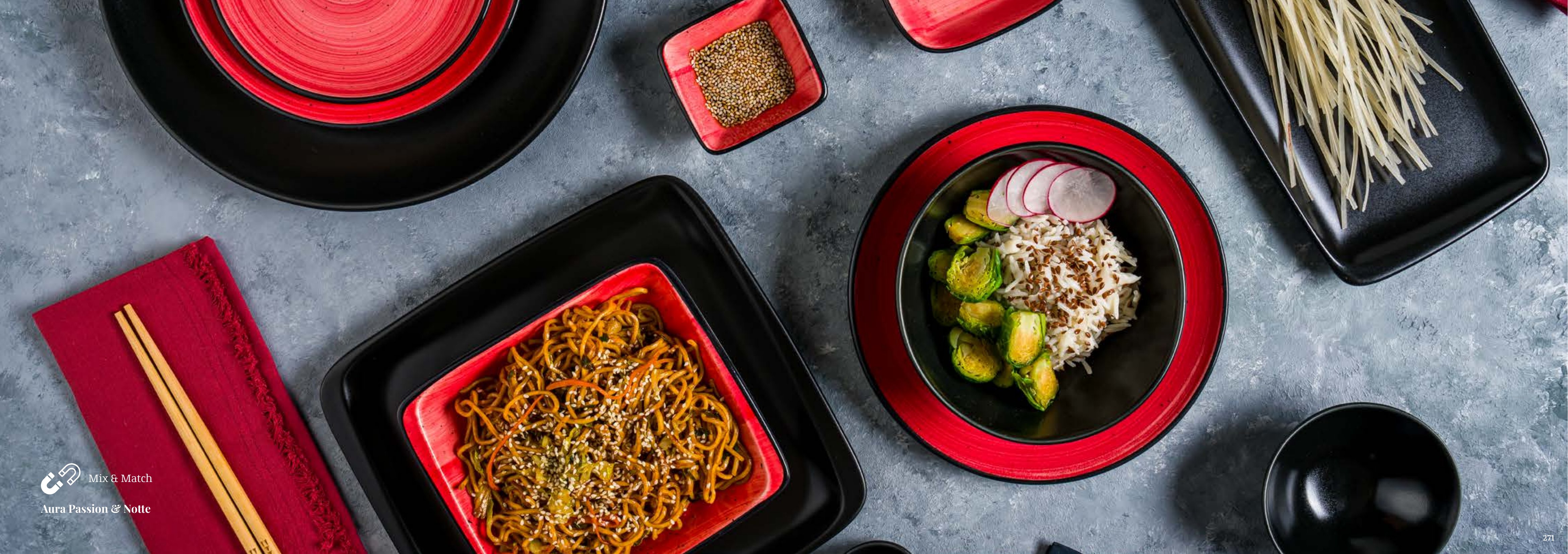
Most reputable hotelware porcelain, including ranges from Bonna and Onis, is sold with edge-chip or breakage warranties — a genuine signal that the body is built for commercial use. It also takes glazes and colours cleanly, from plain white to matte or coloured finishes, without giving up durability.
Best for: casual and premium-casual dining, hotel restaurants, and multi-cuisine kitchens with heavy daily rotation.
Bone china and new bone china
Bone china — and its lighter cousin, new bone china — is what fine-dining rooms reach for when presentation matters as much as durability. Made with bone ash, it fires whiter, more translucent, and thinner than standard porcelain, yet its crystalline structure keeps it surprisingly strong for its weight — the soft glow that heavier ceramics can't match is why five-star hotels use it to frame plated food.
The trade-off is cost: bone china is pricier to produce and buy than vitrified porcelain, and less forgiving of rough handling. It rewards a dedicated fine-dining pass rather than a high-turnover buffet line.
Best for: fine dining, five-star hotels, banquet head tables, and private dining rooms.
Stoneware
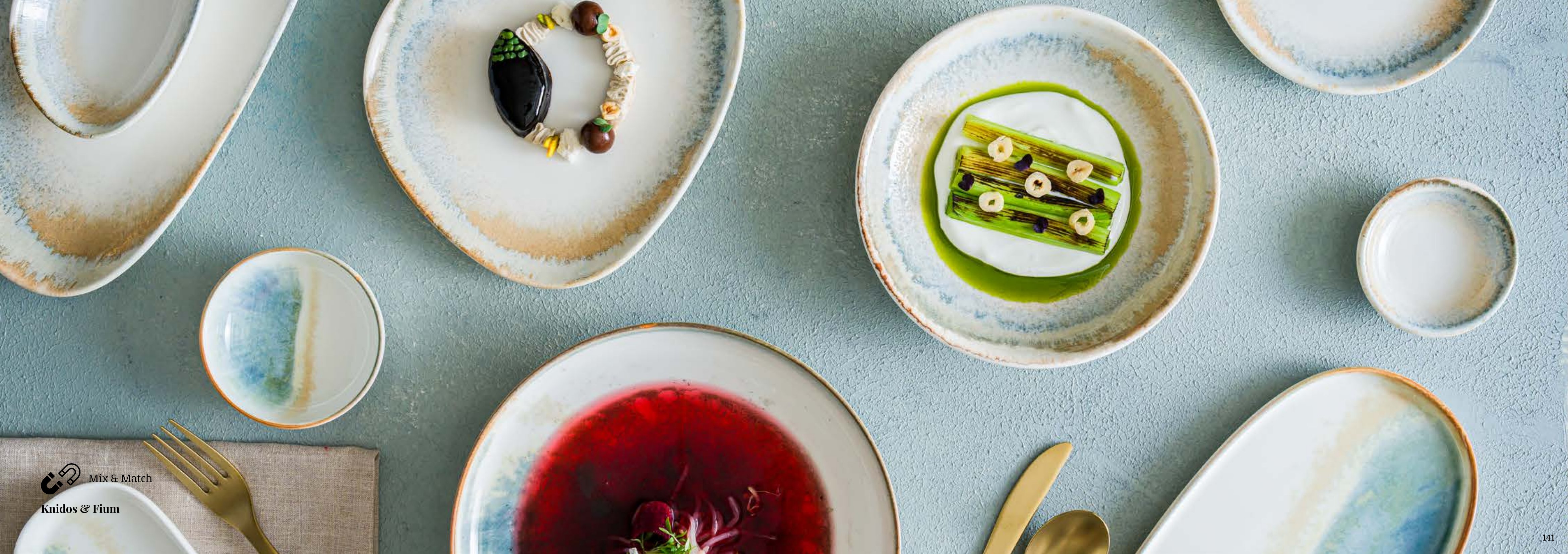
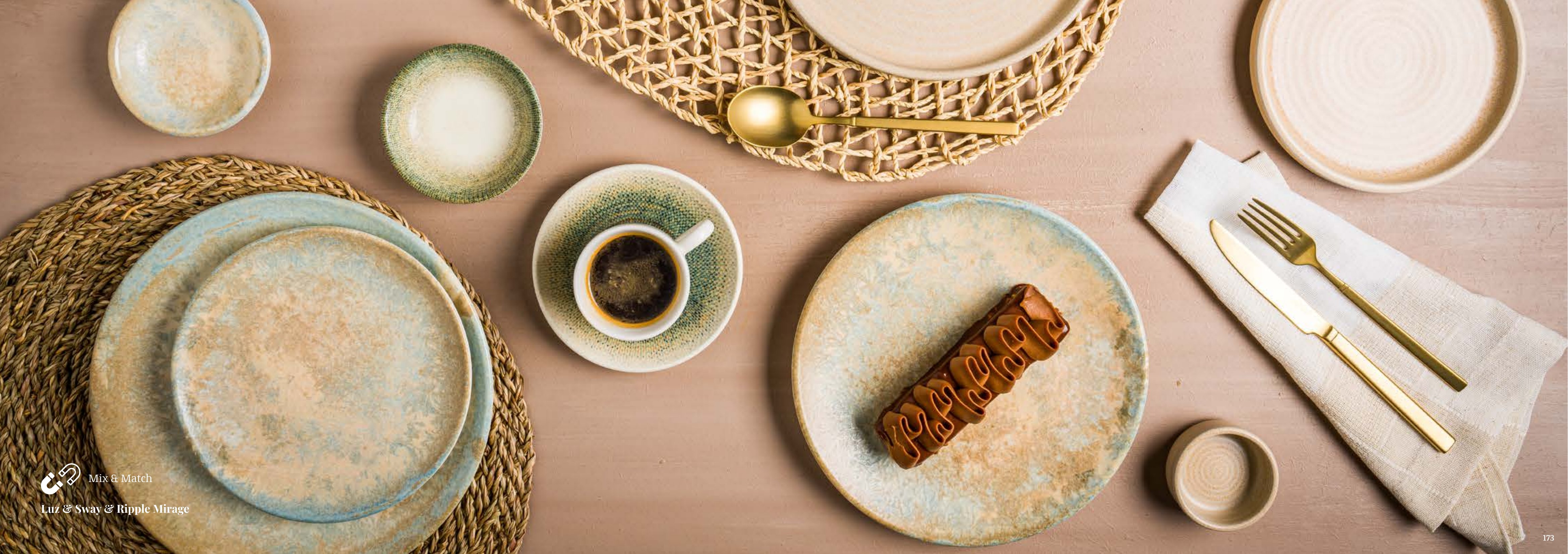
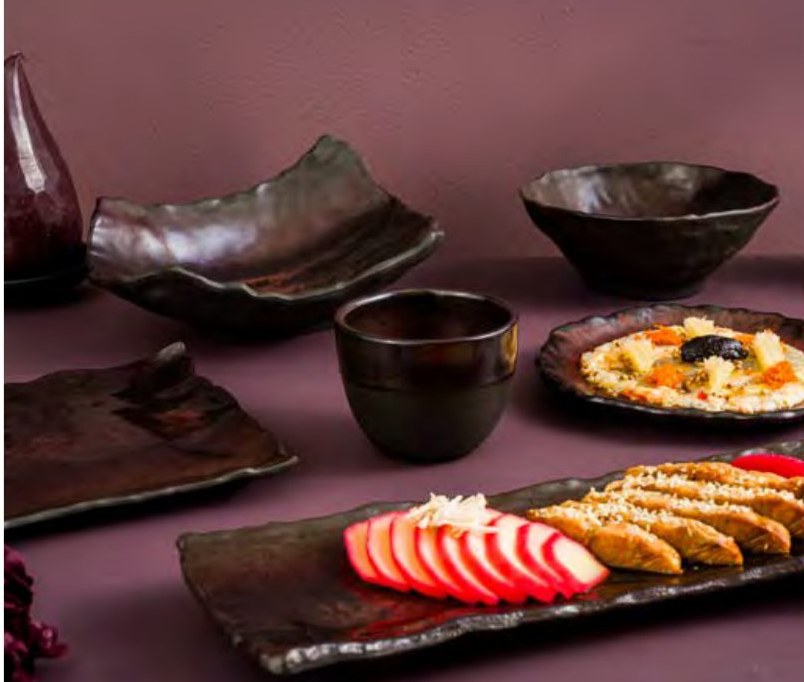
Stoneware brings texture and personality to the table — a heavier-bodied ceramic, often finished in reactive or matte glazes with visible flecks or hand-thrown-style edges, the rustic look that's become a signature of modern cafés and casual-dining concepts. The thicker body handles knocks well, though it's heavier to stack and carry in volume.
Its thicker glaze can be more sensitive to sudden temperature swings than vitrified porcelain, so moving it straight from a hot dishwasher into iced water is worth avoiding. Otherwise, it's durable and photographs well for a handmade, farm-to-table feel.
Best for: cafés, brunch spots, casual and contemporary-Indian concepts, and food-forward bars.
Opalware and toughened glass tableware
Opalware — often toughened or tempered-style glass tableware — is the value-driven alternative to ceramic: lightweight, brilliantly white, and highly resistant to chipping and impact, a favourite for kitchens that need reliability at scale without ceramic pricing. Ranges like Stehlen are built specifically for this everyday-durability brief — opalware and toughened tableware designed to shrug off daily bumps that would chip a standard ceramic plate.
Because it's non-porous and doesn't stain or hold odours, it cleans up fast — useful during back-to-back service. It won't match stoneware's depth of glaze, but for toughness per rupee, it's hard to beat.
Best for: high-volume casual dining, staff cafeterias, and budget-conscious multi-outlet chains.
Melamine
Melamine isn't ceramic or glass at all — it's a hard plastic resin moulded to imitate porcelain. Its defining trait is that it's essentially unbreakable: drop it, stack it carelessly, send it out in a delivery bag, and it survives — the standard choice for poolside service, outdoor seating, buffet display, and room-service trays.
The catch: melamine is not microwave-safe and shouldn't go near an open flame or hot oven, since it can warp or scorch at high heat. It's also not right for a fine-dining pass, where even premium melamine reads as "plastic" up close. Used where it belongs, it's a genuinely smart, low-breakage choice.
Best for: poolside and outdoor dining, banquet and buffet risers, QSR trays, and room service.
Restaurant Crockery Materials Compared
| Material | Chip-resistance | Look | Relative cost | Best-fit venue |
|---|---|---|---|---|
| Porcelain / vitrified hotelware | High, often chip-warrantied | Clean, classic, versatile finishes | Mid | Multi-cuisine restaurants, hotels |
| Bone china / new bone china | Moderate — strong for its weight | Whitest, most translucent, elegant | High | Fine dining, five-star hotels |
| Stoneware | Good — thick body absorbs knocks | Rustic, textured, characterful | Mid | Cafés, brunch spots, casual-contemporary |
| Opalware / toughened glass | Very high — built for impact | Bright white, simple, uniform | Low–mid | High-volume casual dining, cafeterias |
| Melamine | Very high — essentially unbreakable | Porcelain-look; premium ranges look close | Low | Poolside, outdoor, buffets, QSR |
Choosing Crockery by Venue Type
Once you know the materials, matching them to your venue format is the next step. To browse first, the full crockery range is organised by shape and size.
Fine dining
Lead with bone china or premium vitrified porcelain for the main course sequence, where the plate is part of the presentation. Save heavier stoneware for specific courses, such as a rustic starter, rather than the whole table.
Casual dining and cafés
This is stoneware's home ground, usually mixed with vitrified porcelain for high-turnover items like side plates and bowls. The handmade look suits a photogenic menu, while porcelain keeps the core rotation durable and easy to re-order.
QSR and cloud kitchens
Speed and breakage economics matter more than presentation here. Melamine suits takeaway-adjacent service, while opalware or simple vitrified porcelain works for dine-in counters — both stack tightly and keep replacement costs low. Bone china is the wrong tool for this format.
Banquets and buffets
Banquets need volume, consistency, and low breakage risk across a long service. Vitrified porcelain is the standard for plated courses, while melamine and toughened glass suit buffet risers and chafing accompaniments that get moved constantly.
Poolside and outdoor
Anywhere crockery travels outside — poolside bars, garden seating, rooftop lounges — melamine is the practical choice. It won't chip on a stone deck, it's light to carry, and modern finishes have closed much of the visual gap with ceramic.
Practical Buying Considerations
Beyond material choice, a few practical factors decide whether a crockery investment pays off:
- Chip-resistance and edge warranties
- Weight and stackability
- Standardising a range
- Breakage economics and open-stock re-ordering
- Matching pieces across the menu
Chip-resistance and edge warranties
Ask any supplier whether a range carries an edge-chip or breakage warranty. Reputable hotelware porcelain manufacturers offer this because the rim is engineered to resist commercial handling — a genuine quality signal, not just a sales line.
Weight and stackability
Heavier pieces can feel premium but slow servers down and take up shelf space. Before committing to a range, stack a sample set the way your pass will actually stack it: tight stacks save time and reduce breakage from wobbling.
Standardising a range
Pick one core material family for most of your table setting, and bring in a second deliberately for accents. Standardising simplifies staff training and turns a broken piece into a two-minute reorder instead of a hunt for a discontinued pattern.
Breakage economics and open-stock re-ordering
Crockery breaks — it's a cost of doing business, not a failure. What matters is whether you can top up exactly what broke. Open-stock collections, where individual pieces stay available long after the original order, let you reorder a dozen side plates without buying a new set.
Matching pieces across a menu
A tasting menu, a buffet spread, and a bar snack list often need different plate sizes from the same family, so the finish stays consistent as pieces change. Explore sizes and shapes across the full crockery collection before finalising quantities.
A Quick Note on Care
Whatever material you choose, a few habits protect the investment:
- Avoid metal-on-glaze contact — dragging cutlery or steel trays across the surface leaves grey marks and dulls the glaze.
- Avoid sudden temperature swings — moving pieces from a hot dishwasher into iced water stresses the glaze, especially on stoneware and bone china.
- Stack within recommended limits — over-stacking is a common cause of chipped rims in a busy pass.
Ready to standardise your crockery? Browse porcelain, bone china, stoneware, and opalware — including Bonna, Onis, and Stehlen — across our full crockery collection, or explore everything we carry. For a wholesale quote, reach out via /contact or WhatsApp us at +91 95152 27616.
Frequently Asked Questions
Sourcing tableware for your venue in Bangalore?
Browse 11,000+ pieces across 12 premium brands, or send us your list for a wholesale quote.